Future Demand – James Hurman
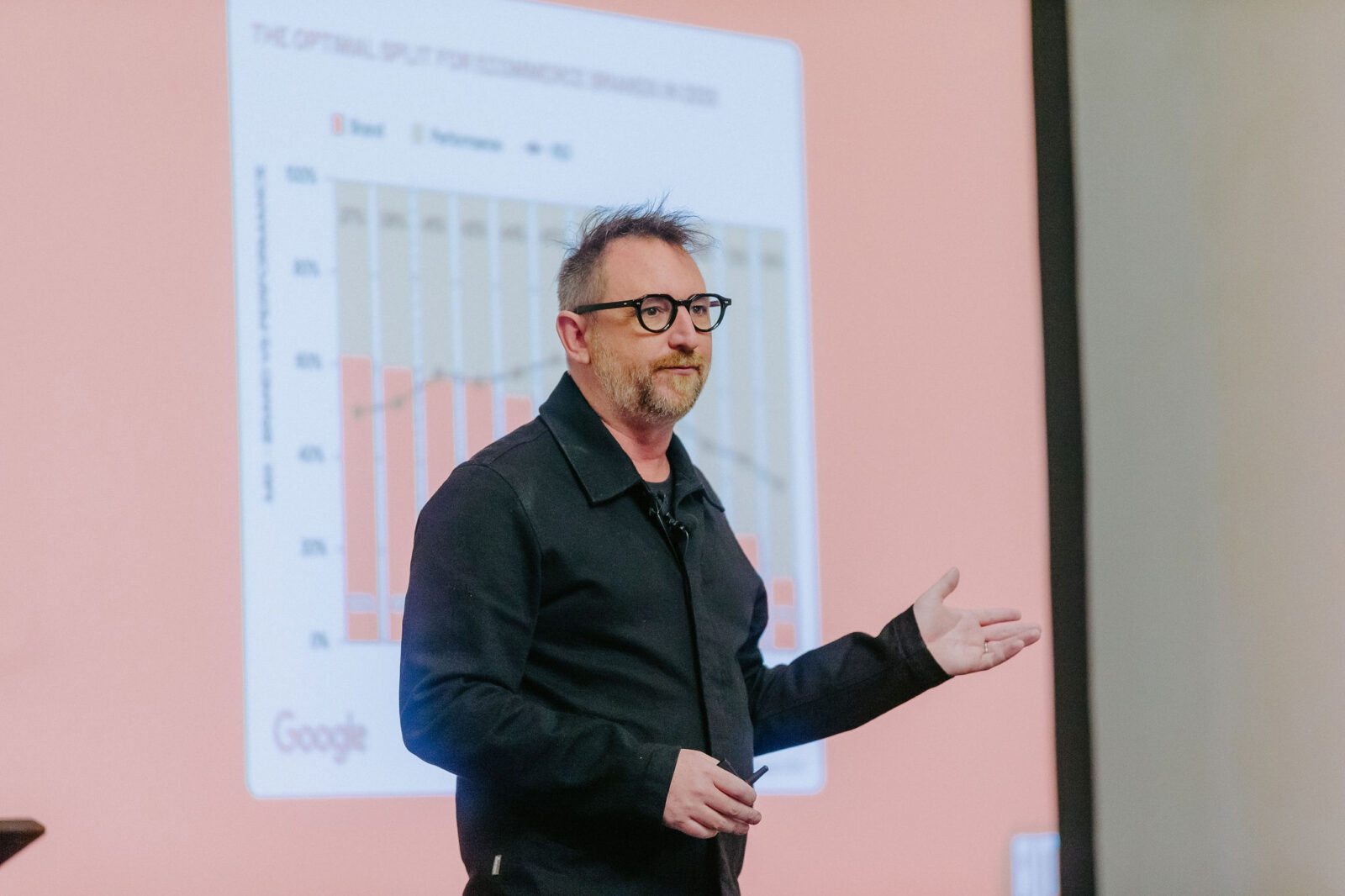
FUTURE DEMAND, James Hurman – 7 key takeaways for marketers
James Hurman, effectiveness expert and author of Future Demand, shared key learnings from his latest book, revealing how marketing to tomorrow’s customers can help brands escape the performance trap and unlock sustainable, profitable growth.
Key take-aways from his presentation:
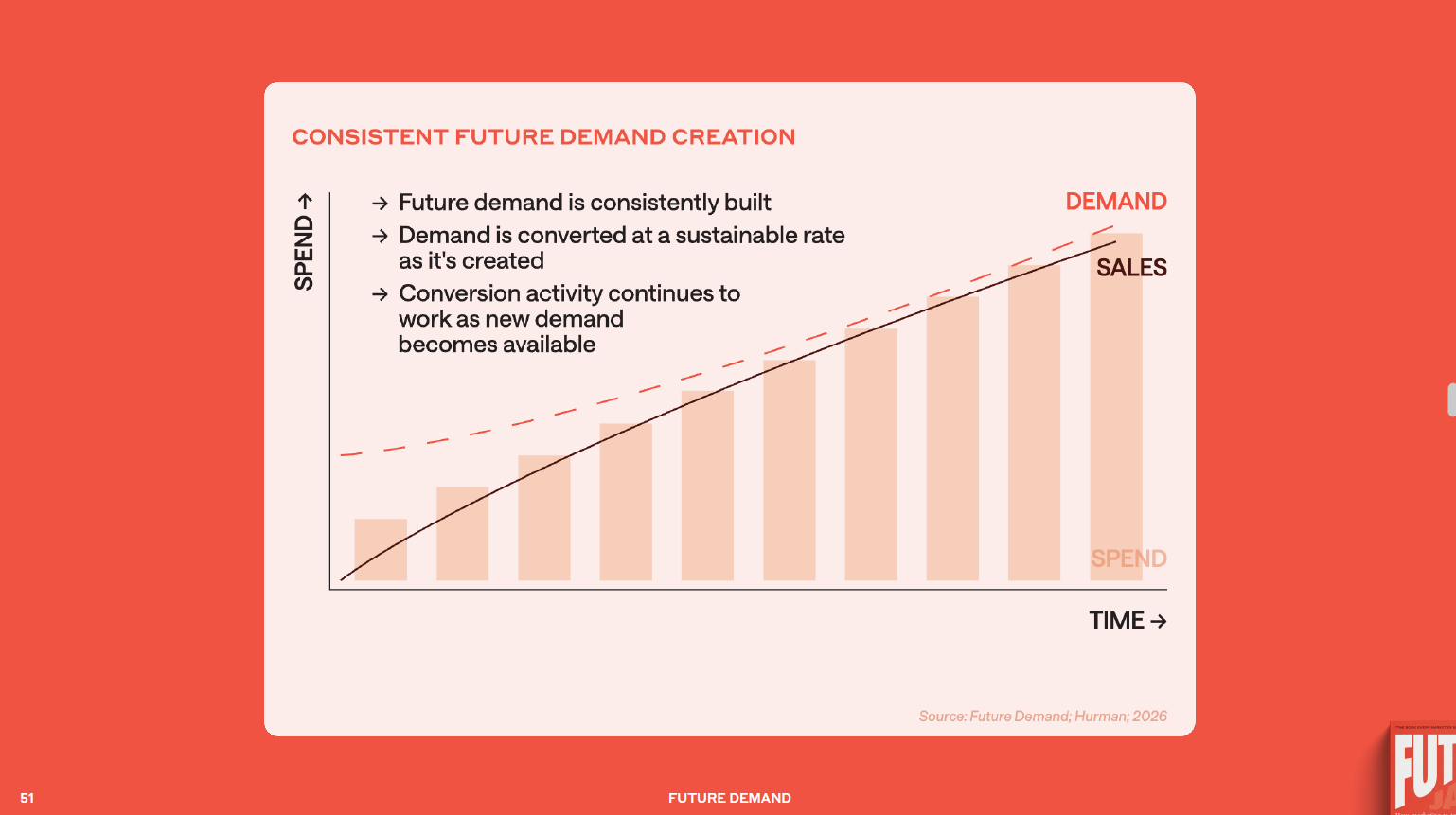
- Only a fraction of buyers are in the market at any given time. Current demand represents just 5–25% of potential buyers, the majority are future buyers who aren’t yet in-market.
Implication: Invest in brand building to build familiarity and preference before people are ready to buy, rather than focusing exclusively on immediate conversions. - Familiarity gives brands a significant advantage. According to Hurman, 84% of buyers choose brands already in their consideration set, reinforcing the importance of being known before purchase decisions begin. Implication: Prioritize consistent visibility and mental availability so your brand is more likely to be considered when future buyers enter the market.
- Brand building makes performance marketing work harder. Brand awareness is associated with higher conversion rates, while click-through rates alone are not reliable indicators of business outcomes.
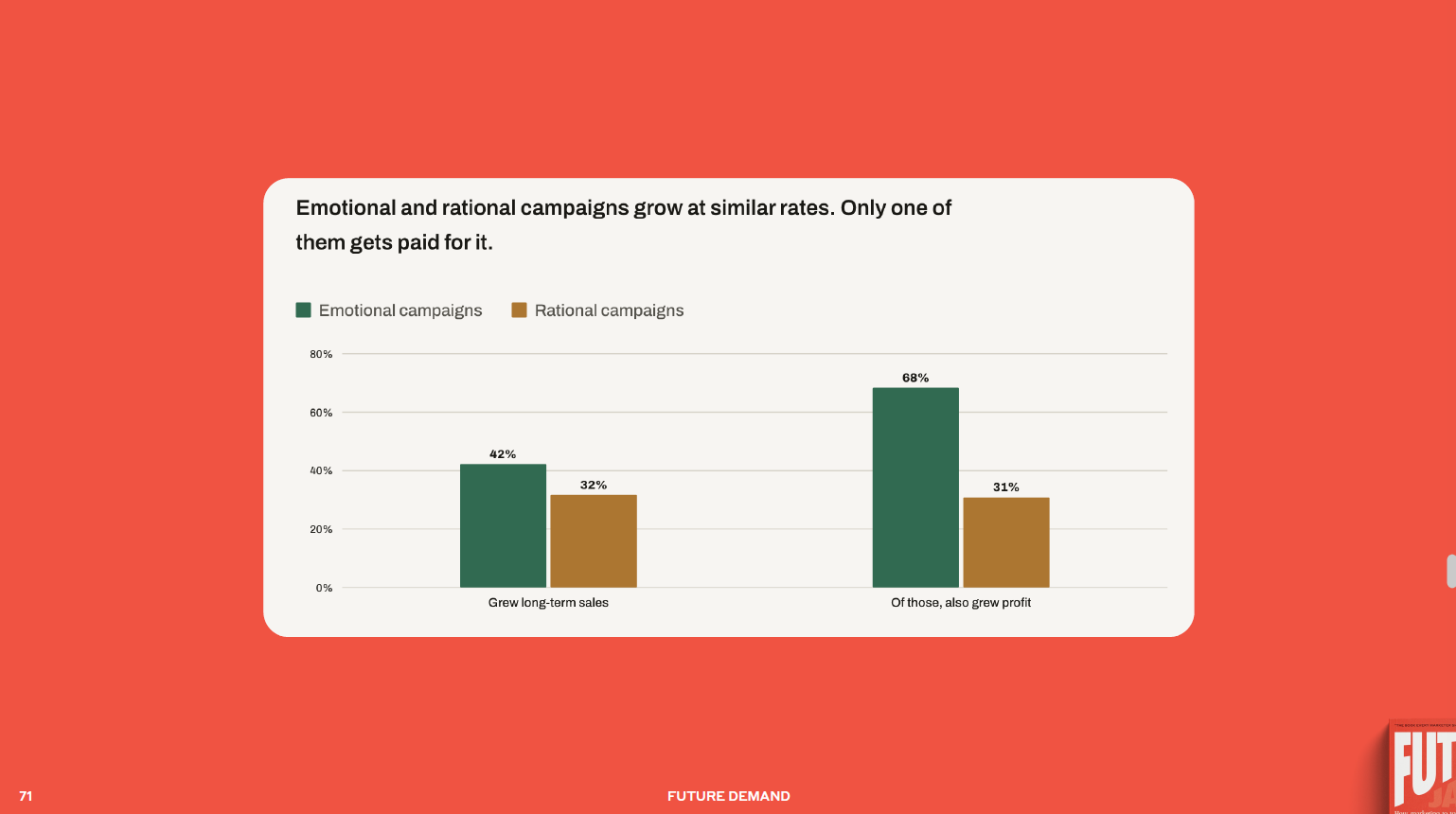
Implication: Treat brand and performance as complementary investments. Evaluate performance activity in the context of overall brand strength, not just clicks and short-term conversions. - Different marketing objectives require different creative and media strategies. Rational, utility-driven messages, clear calls to action and precise targeting are effective tools for capturing current demand sales. Creating future demand requires distinctive, emotional creative that builds lasting memories and reaches people beyond the current customer pool. Broadcast media like TV and radio do this best.
Implication: Match creative, targeting and media choices to the job they need to do, rather than applying performance-marketing tactics to every objective. - Emotion and attention help build long-term brand value. Emotional, memorable advertising can create lasting associations that influence future choices, while broadcast media can deliver broad reach and signal brand credibility and scale. Positive emotional associations can also strengthen perceived value and pricing power.
Implication: Invest in creative that earns attention and builds emotional connections, using media capable of reaching large audiences—not simply the audiences most likely to convert today. - Over-reliance on short-term performance can undermine profitable growth. Evidence and case studies presented by Hurman—including Volvo Trucks, Airbnb and Nike—illustrate the potential long-term consequences of brand investment decisions. Research cited in the presentation supports a balanced brand/performance approach, often around 50/50 or 60/40, depending on context.
Implication: Reassess the balance of investment against business objectives and time horizons. Treat suggested budget ratios as starting points, not universal rules, and account for long-term effects alongside immediate returns. - Prove marketing’s value in business terms. Holdout tests, incrementality experiments and marketing mix modelling can help quantify marketing’s contribution beyond what last-click attribution captures. Hurman also advocated presenting marketing plans as investment cases, with returns forecast over multiple months.
Implication: Equip CMOs, CFOs and CEOs with evidence of how marketing drives incremental sales, market share, pricing power and profitability over time—not just near-term transactions.
The overarching message: Sustainable growth requires marketers to do two jobs: harvest current demand through performance marketing and create future demand through brand building. The strongest strategy connects both, balancing immediate sales with the familiarity, preference and pricing power that fuel future growth.

bio

JAMES HURMAN
Founder, Previously Unavailable; author, Future Demand
James Hurman is a New Zealand-based entrepreneur, investor and advertising effectiveness expert.
He’s the founder and chair of Previously Unavailable, a creative company that partners with, creates and invests into high-growth startup companies.
He’s the author of two acclaimed advertising effectiveness books – The Case for Creativity (2015) and Future Demand (2026) – which bring together evidence-based research to help organisations better plan brand, marketing and advertising strategy. He’s also the author of several major data-driven marketing effectiveness studies including The Effectiveness Code (2020) with Cannes Lions and WARC, and The B2B Effectiveness Code (2021) with the LinkedIn B2B Institute and WARC.
James is the programme director of the Master of Advertising Effectiveness, a global online professional development programme for marketing and advertising people whose alumni includes executives from Airbnb, Disney, McDonalds, New York Times, Salesforce and all of the major advertising agency networks.
He also consults large organisations across the world, is a senior advisor at LIONS Advisory – the consulting offering of Cannes Lions – and is a co-founder of several high-profile New Zealand startups including Tracksuit (brand health tracking SAAS) and New+Improved Ventures, a venture studio specialising in AI and SAAS marketing technology companies.
related research

understanding the drivers of advertising creative
|

why premium matters |
|
the eye-watering cost of dull media |